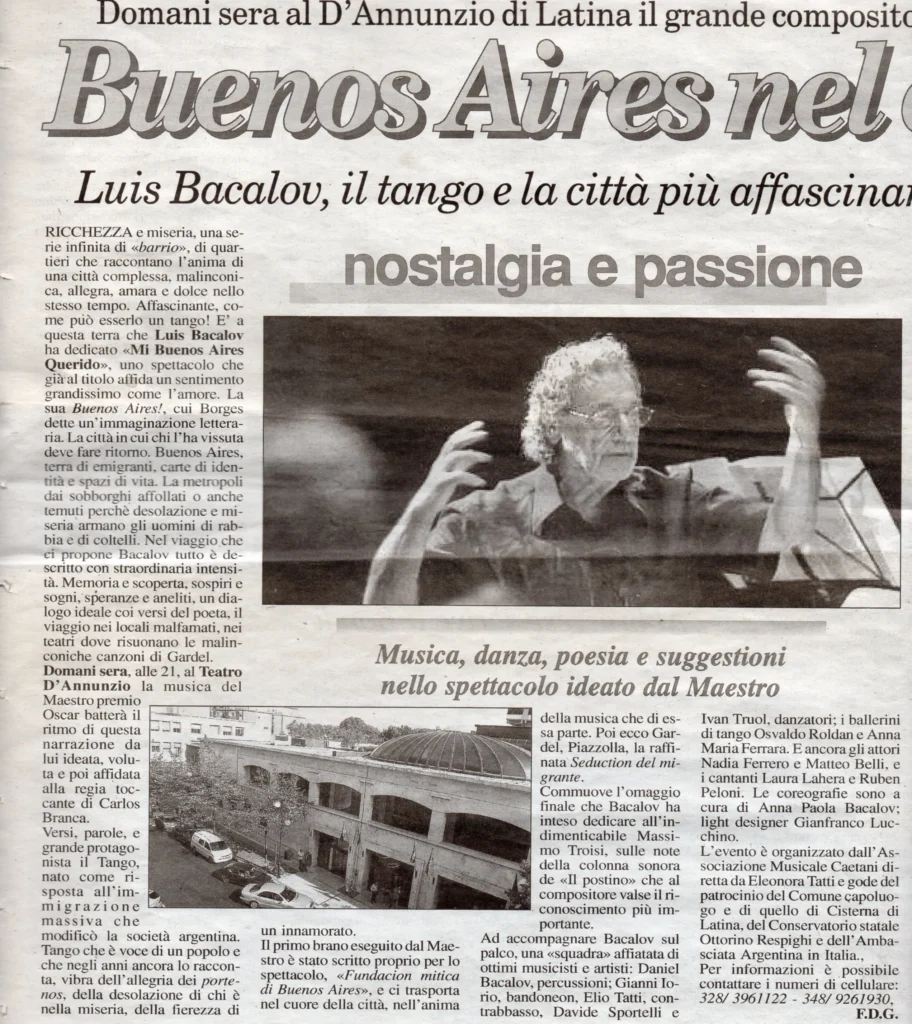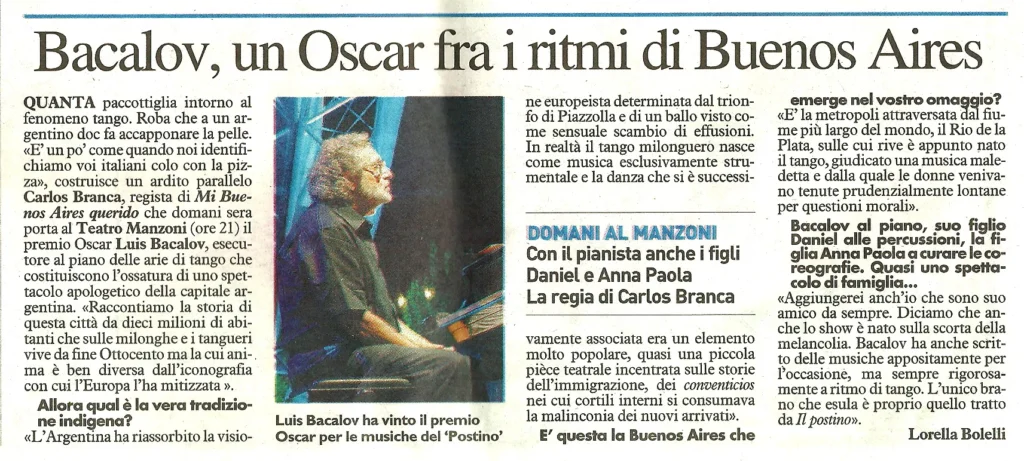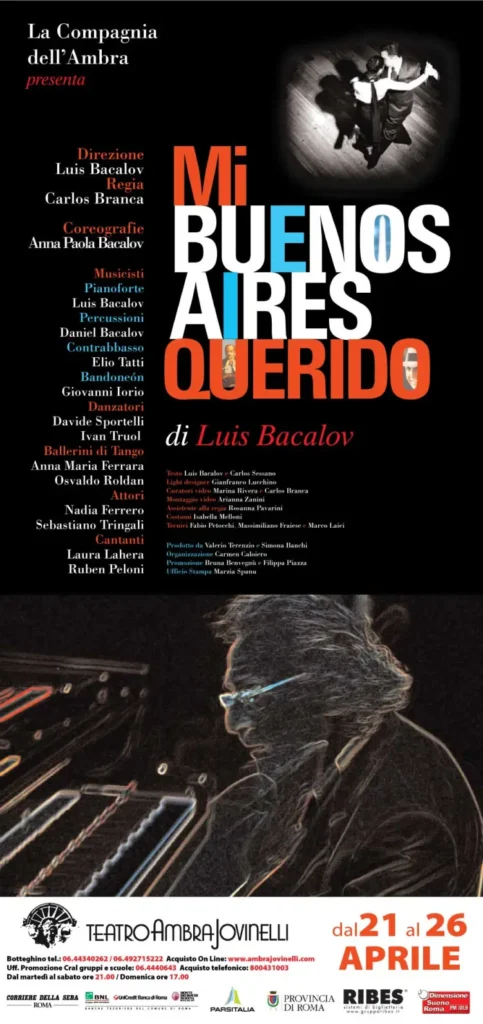
Luis Bacalov, a musical genius, treats the audience to a deeply moving experience in this show, particularly through his piano playing. The story is that of a magical city, Buenos Aires, from its founding to the present day, unfolding through the art form that originated in the suburbs, brothels and taverns of the Argentine metropolis: the tango. The play was written by Bacalov himself in collaboration with Carlo Sessano. The two authors drew on the poetry and figure of Borges – it is no coincidence that the first piece performed by the maestro, “Foundacion mitica de Buenos Aires”, is inspired by a poem by the great writer – and other literary works, such as “Juancito il Camminatore” by Tunon and “Gotan” by Gelman, to reconstruct the city’s history in detail, revealing even the most gruesome underbelly of its streets. Indeed, with the piece “Danza del duelo”, Bacalov makes no secret of the crime, a social scourge, that has long plagued the Argentine capital; the dancers, armed with knives, simulate a fight.
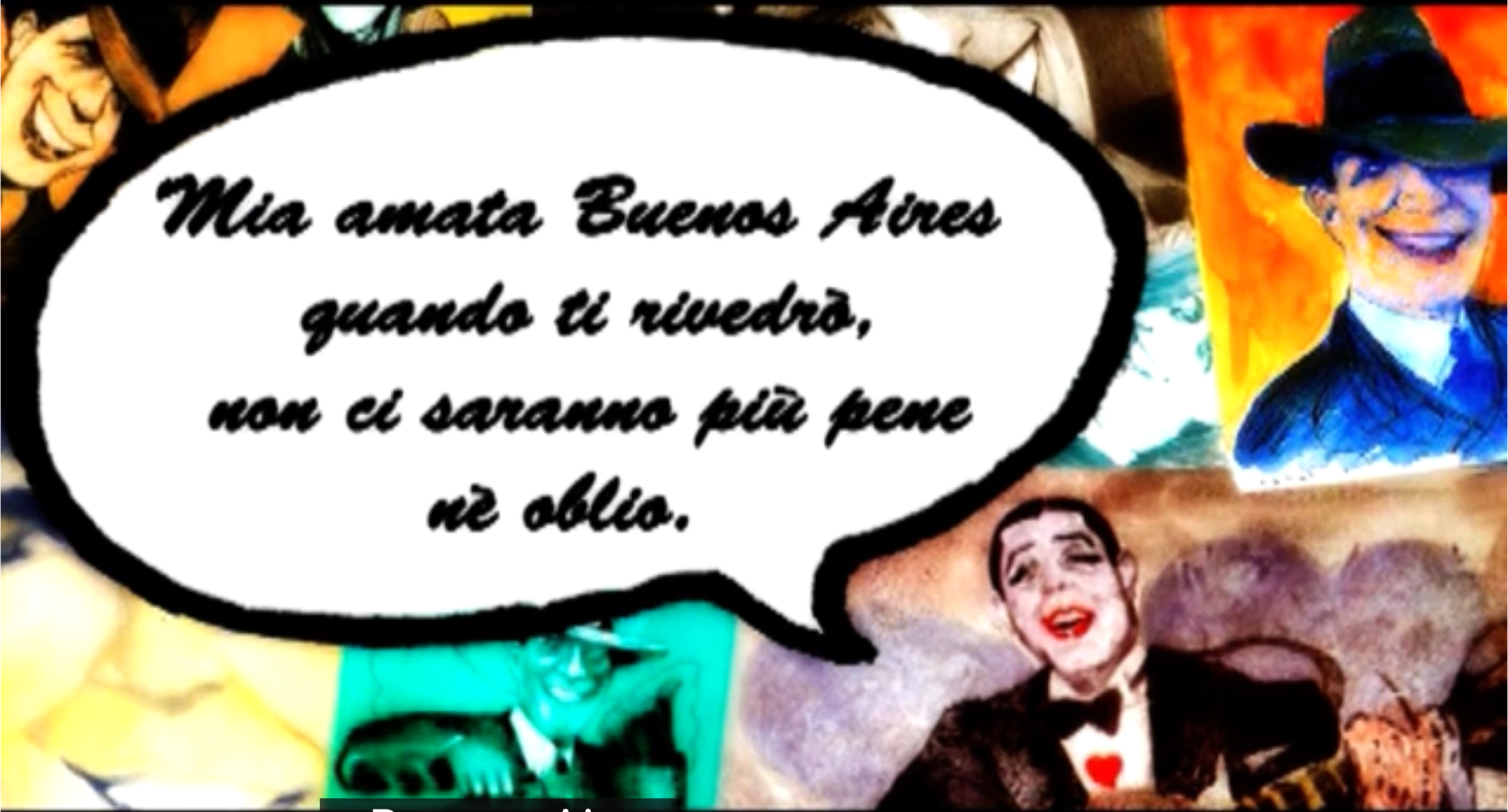
But the real star of the show is undoubtedly the tango – sensual, transgressive and passionate – almost always accompanied by song, paying homage to the great singers and composers, often Italian. Dance, music and words, then, but also video. The classical forms of theatrical expression blend with cinema and comics. Audiences who do not speak Spanish are aided by the translation of the lyrics appearing on screen. This is also because the Argentine language is a hybrid, the result of various influences, dialects and the languages of migrants. And in the finale, to the strains of the soundtrack that earned Bacalov an Oscar, the sad, gaunt face of Massimo Troisi appears in *Il Postino*. A tribute to Argentina, its culture and its people, “Mi Buenos Aiers querido” is a show within a show and succeeds wonderfully in conveying the warmth and passion of a land.